Where flap discs do the hard work in the workshop
A flap disc is not just for grinding off rough bits. In a South African workshop, it often does three jobs in one pass: blending welds, easing sharp edges, and preparing bare metal before primer or paint. That makes it useful on gates, brackets, repairs, frames and general fabrication work where time matters and the finish still has to look right.
The key is matching the disc to the task. A coarser grit removes material faster, while finer grits help you tidy the surface without cutting too deep. If you are working on mild steel in Pinetown or site repairs in Durban North, the right disc can save a lot of follow-up filing and sanding later on.
Choosing the right grit and backing for the job
Most finishing problems start with the wrong grit. Too coarse and you gouge the surface, too fine and you waste time. For weld blending on steel, many workshops start around 40 grit for heavier clean-up, then move to 60 or 80 grit for a cleaner finish. For final prep before coating, 120 grit can help on lighter work, though the steel still needs proper cleaning first.
- 40 grit for faster weld knock-down and heavy surface removal
- 60 grit for general blending on fabricated steel
- 80 grit for edge finishing and smoother prep
- 120 grit for lighter finishing before coating on less aggressive work
Backing matters too. A disc that is too stiff can leave marks, while a better balanced disc helps the operator keep contact even. On humid coastal jobs, especially near Umhlanga or Durban North, store discs in a dry place so the backing and abrasive stay in better condition.
How to blend welds without thinning the metal
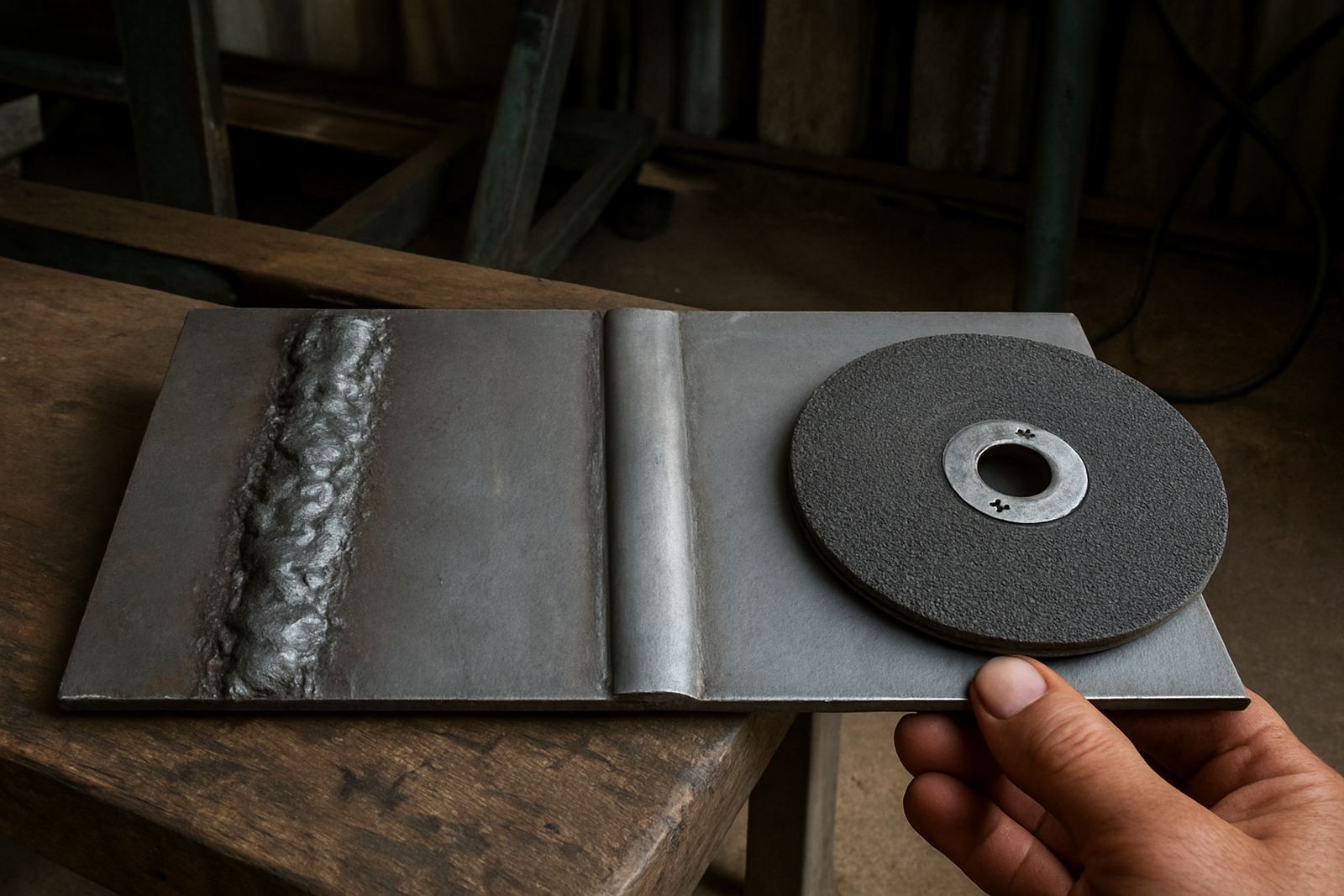
The aim is to smooth the weld not erase the parent metal. Keep the tool moving and let the disc skim the high spots. If you sit in one place too long, you will undercut the surface and weaken the area around the join. That is a common mistake on gate repairs and small structural jobs where the weld bead is strong but the finish is left too aggressive.
Use light pressure and work in short passes. Check the heat build-up with your hand near the area, not on it, because thin plate can warp quickly. When the weld is nearly flush, switch to a finer grit and finish with a lighter touch. A clean blend should still leave enough material for strength, especially on load-bearing parts.
For stainless or coated materials, make sure the disc and the job match. Cross-contamination from mild steel can leave marks and cause corrosion later. That detail gets missed often, and it costs time when the job comes back for correction.
Edge refinement that reduces handling damage
Sharp edges chip, catch gloves and make assembly harder. A flap disc is ideal for breaking edges after cutting, trimming and drilling. On brackets, shelves, guard plates and fabricated frames, a small edge radius can improve both safety and fit-up. It also gives coating a better chance of covering the edge evenly.
- Break sharp edges after cutting to reduce burrs and handling damage
- Round corners lightly before powder coating or painting
- Clean out small irregularities around drilled holes and slots
- Finish moving parts so they do not snag during assembly
In a workshop setting, this is one of those simple habits that improves the final result without adding much time. A few seconds on each edge can mean less rework during assembly and fewer complaints from installers on site.
Surface prep before paint, primer or coating
Good finishing starts before the first coat goes on. Flap discs can remove rust, scale, old paint and light contamination so the surface is ready for proper prep. On steel that has sat through a load-shedding period and picked up moisture, you often need to clear oxidation before any coating work begins. That is common in Durban where humidity can move in quickly.
For coating prep, do not rely on the flap disc alone to solve grease, oil or heavy pitting. Clean the surface first, then use the disc to create a consistent profile. Wipe down the area after grinding so dust does not sit in the finish. It sounds basic, but a lot of coating problems come from rushed prep rather than the paint itself.
Where the job needs a neat visual finish, do a sample area first. That helps you check the grit, pressure and angle before committing to the whole panel or frame.
Keeping the disc working well for longer
Flap discs last better when they are used with the right speed and pressure. If the disc starts glazing, you are usually pressing too hard or working on material that is too soft for that grit. Let the abrasive do the work. If you are forcing it, the finish becomes uneven and the disc wears out faster.
Keep the angle steady and avoid twisting the grinder across the surface. That reduces heat marks and gives a more even finish. In busy trade workshops around Westmead and New Germany, it helps to keep finishing discs separate from heavy stock removal discs so staff grab the right item without thinking twice.
- Store discs flat and dry to avoid damage from humidity
- Use the correct grinder speed for the disc rating
- Replace worn discs before the edges start fraying badly
- Keep a few grit levels in stock so the finish step does not stall
A Durban workshop example that shows the difference
A small fabrication team in Pinetown repairing mild steel gate panels had two repeat problems: welds looked rough after grinding, and the paint lifted near the repaired sections within weeks. The fix was simple but specific. They changed from one heavy grinding disc to a staged flap disc process, starting with a coarser grit for weld blending, then moving to a finer grit for edge clean-up and final prep. They also added a proper wipe-down before priming.
The result was a cleaner finish and fewer call-backs. The team was not trying to make every job look polished, only neat enough for a solid coating and a presentable result. That is the value of flap disc finishing in real trade work, it is practical, quick and repeatable when the process is right.
For workshops setting up new grinding and finishing routines, it helps to plan the disc range alongside the rest of the stock. That way the right option is there when the job changes from rough fabrication to final clean-up.