Built for daily workshop movement
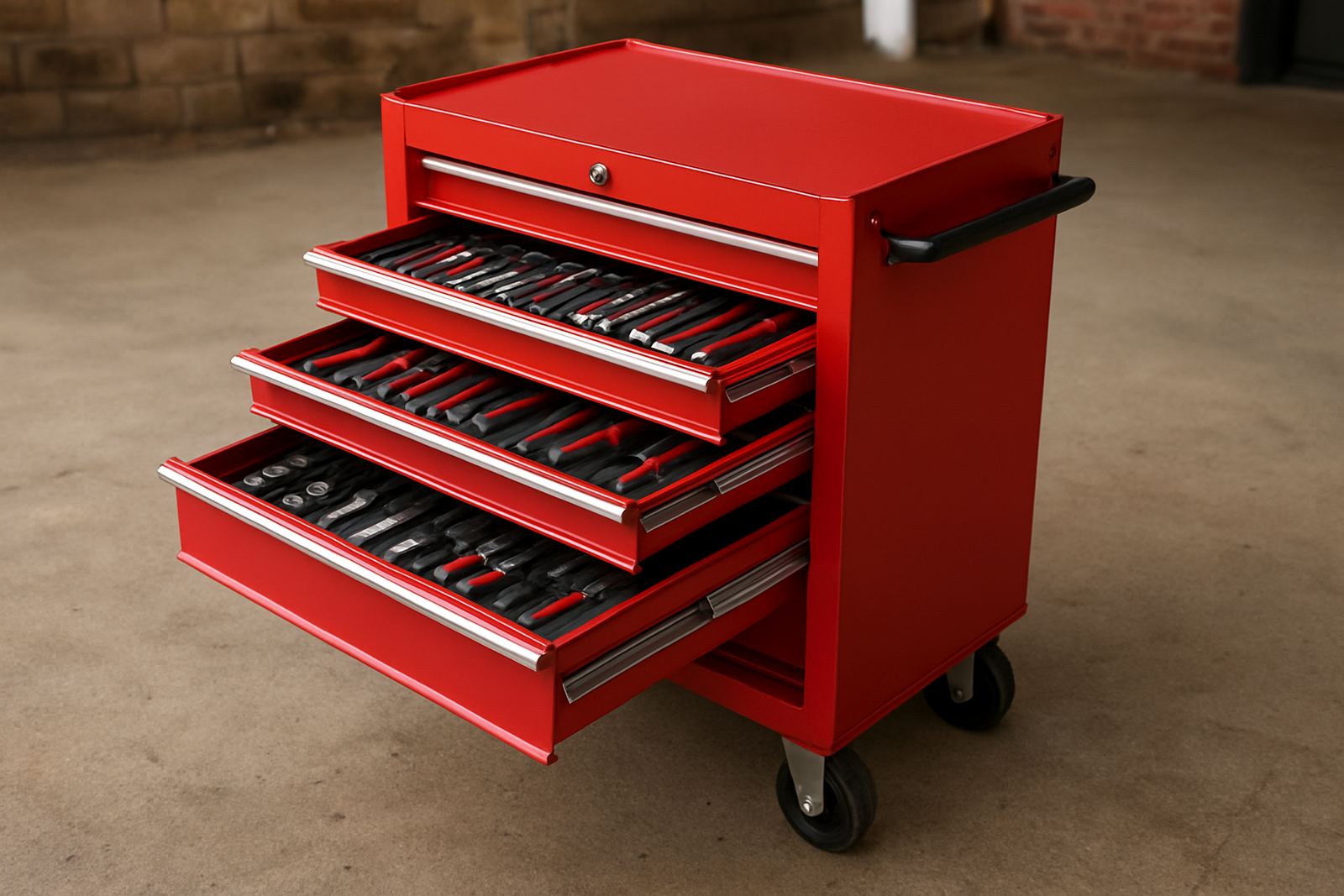
A rolling tool chest is a mobile storage unit with drawers or compartments for frequently used tools, fasteners and service items. In a Pinetown or Westmead workshop, that means you can wheel your main kit from the prep bay to the machine area, or move it out of the way for cleaning and stock take. The chest is made for repeated use, so the frame, runners and castors must handle weight without wobble or sticking.
For trade teams in Durban, humidity and dust matter. A good chest should keep tools off the floor, reduce rust risk and stop small parts disappearing into drawers and buckets. It is not just storage, it is workflow control, and that saves time on every shift, even when load-shedding or a rushed delivery throws the day out.
- Mobile storage for hand tools, sockets, bits and measuring gear
- Lockable for shared workshops and after-hours security
- Useful for fitting bays, maintenance rooms and site support teams
- Helps standardise where tools live, so missing items show up quickly
Sizes and layout options to match your kit
Rolling tool chests are usually chosen by width, drawer count and total load capacity. Smaller units suit a technician who carries a compact set of tools, while wider chests are better for a full workshop starter setup or a shared team station. Drawer depth matters too, because spanners and torque tools need different space from pliers and screwdrivers. If you buy too small, drawers become crowded and tools get damaged.
Common options include a compact 5 drawer chest for light to medium use, a mid-size 7 drawer unit for general trade work, and larger 8 to 10 drawer chests with deeper bottom storage for bulkier items. Some units include a top tray, side handle and lockable central latch. If you work in New Germany or Hillcrest and keep a mixed stock of electrical, mechanical or assembly tools, a wider chest usually makes more sense than stacking two smaller units.
- Compact chest for mobile technicians and small garages
- Mid-size chest for general repair and maintenance work
- Larger chest for shared teams and workshop benches
- Drawer inserts and mats can help separate fixings and fragile tools
Where it suits best in Durban and beyond
This product suits practical working spaces where tools are used often and need to be returned quickly after each task. It works well in motor workshops, light fabrication rooms, plant maintenance areas, electrical service bays and training rooms. In Durban North or Umhlanga, it also makes sense for tidy home garages where tool storage needs to stay compact and mobile.
Because this is a storage item, it does not need power or gas. That is useful during load-shedding, when you still want your hand tools organised and ready. The only requirement is a level floor and enough space to open drawers fully. On uneven floors, check that the castors roll smoothly and that the chest does not twist when loaded. If your workshop floor has drains, ramps or rough joints, this should be factored in before ordering.
- No electrical connection needed
- No gas, compressor or fixed installation required
- Best on a level concrete floor or smooth tiled surface
- Useful in workshops, garages, training areas and mobile service vans
What to check before you place an order
Before ordering, count the tools you want stored and decide whether you need shallow drawers, deep drawers or a mixed layout. Measure the space where the chest will stand and make sure there is room to open the drawers fully without hitting a wall, vehicle or worktop. If you are building a new workshop in Pinetown or upgrading an existing one, plan the chest around your daily jobs rather than around what looks neat on paper.
Also check the load rating per drawer and the overall weight capacity. Heavy items like hammers, cordless tool chargers, socket sets and torque tools should sit low in the chest. If you need to move the unit often, the castor size and brake action matter. A weak wheel will rattle and mark the floor, and once a chest is overpacked it becomes harder to steer. That causes avoidable wear, and sometimes a tipped drawer too.
- Measure the footprint and drawer opening space
- Confirm overall load capacity and drawer weight limits
- Check whether you need a lock, side handle or top tray
- Match the drawer size to your largest tools and kits
Care, cleaning and servicing in local conditions
Keep the chest clean by wiping dust and oil from the top and handles at least weekly. In coastal Durban, a dry cloth after work helps reduce surface rust on drawers and tool bodies. If grit builds up around the runners, the drawers will not slide properly and the chest may feel stiff. A small amount of suitable lubricant on moving parts can help, but do not overdo it because excess oil collects dirt.
Check castors, brakes and drawer slides every few months, especially if the chest is moved across expansion joints or rough workshop floors. Tighten loose fasteners and replace damaged mats before they start cutting into tools. If a drawer begins to bind, empty it and check for bent runners or an overloaded layout. Regular care keeps the chest working properly and helps your tools last longer, which matters when replacement delays can hold up a job.
How Jameson Tools supports workshop setup
Jameson Tools can help you choose the right rolling tool chest as part of a wider workshop setup. That includes tool kit planning, starter kit bundling, consumables replenishment and tool replacement matching. For teams in Pinetown, Westmead and nearby areas, it is often useful to standardise stock lists so each technician carries the same core items. That cuts confusion and makes it easier to spot missing tools.
For new staff or added vehicles, on-site tool inductions and workshop setup advice can help the chest slot into a practical system from day one. If you need to build around a trade account or organise courier delivery nationwide, the order can be aligned with the rest of your workshop schedule. The aim is simple, put the right tools in the right place and keep them there.
- Tool kit planning for new or expanding workshops
- Stock list standardising for shared teams
- Courier delivery coordination across South Africa
- Training support for better tool care and daily use
Key facts
| Product type | Mobile rolling tool chest |
|---|---|
| Typical sizes | 5 drawer, 7 drawer, and larger multi-drawer units |
| Material | Powder-coated steel body with metal drawer runners |
| Mobility | Heavy-duty castors with brake wheels |
| Security | Lockable drawer and central latch options |
| Power or gas needs | None required |