What a wire brush wheel does in day-to-day workshop work
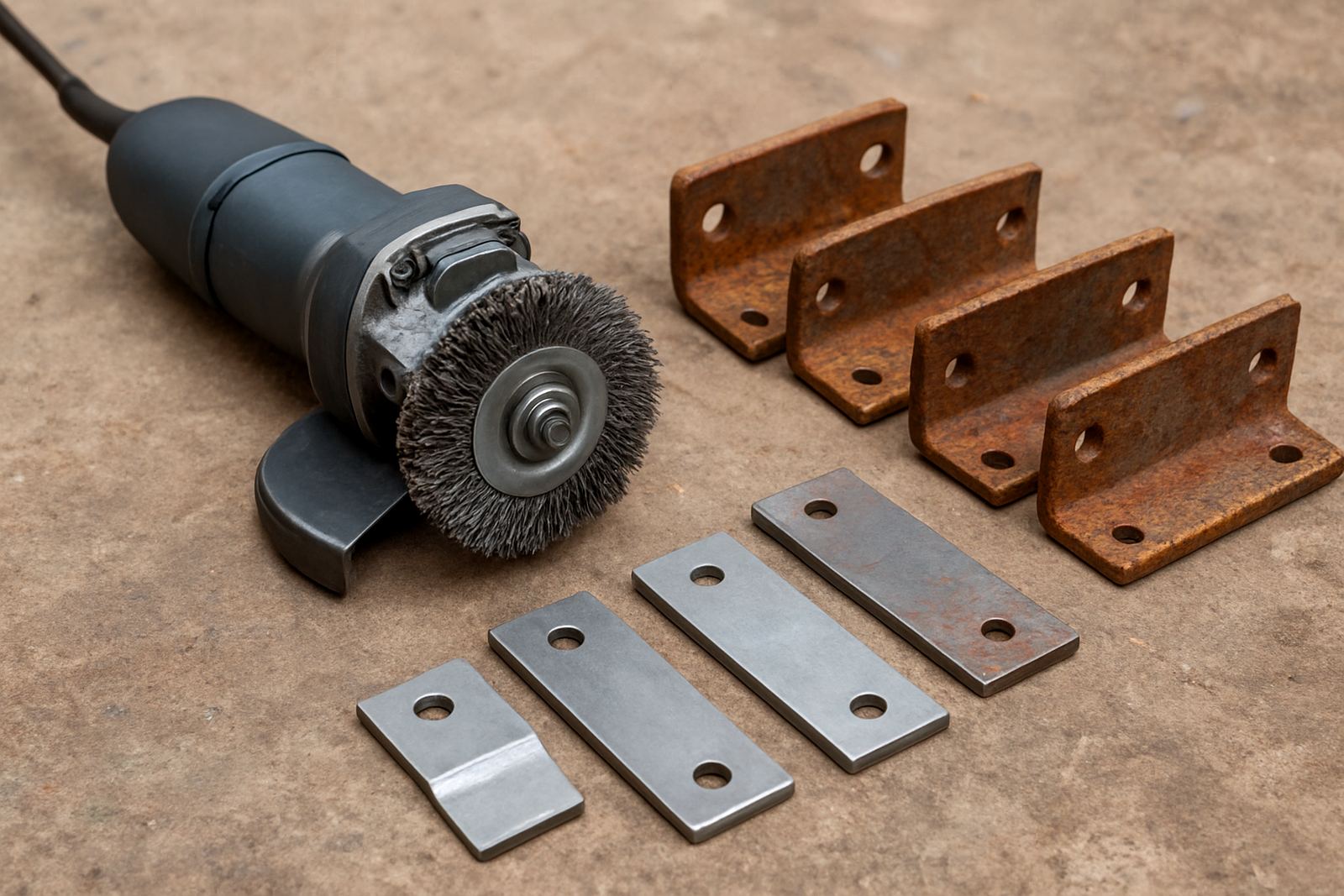
A wire brush wheel is fitted to a grinder or similar powered tool to clean metal surfaces quickly and evenly. It is used before painting, welding, sealing or fabrication work where loose rust, old coating, burrs or dirt must be removed first.
In a Durban or Pinetown workshop, that matters because coastal humidity can bring rust back fast if steel is left exposed. A wire brush wheel helps you prep gates, brackets, frames, guard rails, trailer parts and general workshop steel without needing heavy sanding for every job.
These wheels are best for surface cleaning and prep rather than deep material removal. If the job calls for stripping thick corrosion or shaping heavy welds, you may need a more aggressive abrasive. For everyday trade use though, a wire brush wheel is one of those consumables that earns its place quickly.
Available sizes, forms and fitment options
Wire brush wheels are supplied in a few common sizes so you can match the tool, the job and the available working space. Smaller wheels suit tight corners and detailed cleaning, while larger wheels cover broader flat surfaces faster.
- Typical diameters: 75 mm, 100 mm, 115 mm, 125 mm and 150 mm
- Wire types: crimped wire for general cleaning, knotted or twisted wire for heavier rust and scale
- Mounting: threaded or arbor fitments depending on the tool and wheel style
- Material: carbon steel wire for general use, stainless options where contamination control matters
For narrow sections, brackets and weld seams, a smaller wheel gives better control. For farm repairs, workshop benches and vehicle prep, a wider wheel can save time. The key is to keep the wheel matched to the grinder speed and the surface you are cleaning, otherwise the wire will wear too quickly and the finish can become uneven.
When ordering, check whether you need a wheel only or a mounted accessory that fits directly onto the machine you already use. If you are setting up a starter kit, it often makes sense to take a few sizes at once so the workshop does not get stuck during a rush job.
Where this wheel suits best in South African trade work
Wire brush wheels are used across general metal work, maintenance, repair and light fabrication. They are handy in jobbing workshops, plant maintenance teams, small engineering bays and home garages where rust and coating prep come up often.
They suit common local work such as:
- Cleaning mild steel before primer or paint
- Removing weld spatter after fabrication
- Refreshing handrails, hinges and gate parts
- Preparing trailer frames and towbar components
- Cleaning brackets, channels and flat bar after storage
In coastal areas like Durban North and Umhlanga, the brush wheel is often used as part of regular maintenance because salt air speeds up surface oxidation. Inland, it is useful for workshop stock that has sat in a storeroom or on a loading bay and picked up surface rust. It is also a practical choice for seasonal workshop refresh work when older tools and fixtures need a tidy-up before the busy period.
How to install it safely and what power you need
Fitment is straightforward, but the wheel must match the machine speed, spindle size and the intended task. Most wheels are used on angle grinders or bench-mounted equipment, depending on the style. Always check the maximum safe operating speed marked on the wheel and make sure your tool does not exceed it.
Before fitting, inspect the wheel for loose wires, bent sections or damage from transport. Tighten it correctly and run the tool briefly at a safe distance before using it on the workpiece. Do not force the wheel into the metal. Let the wire do the work at a steady angle and keep the tool moving so you do not gouge the surface.
No gas supply is needed, only the correct powered tool. That makes it useful in workshops where gas bottles are limited or where load-shedding planning is already part of the day. If your site runs on generators or inverter support, confirm the wattage draw of the grinder and allow for startup load. Good cable management and clear bench space also matter because wire debris can build up quickly.
For fitment and safe use, keep these points in mind:
- Match wheel diameter to the tool guard and workspace
- Use the correct spindle or arbor size
- Check maximum RPM before first use
- Wear eye protection, gloves and a face shield where needed
- Keep bystanders clear, as loose wires can flick out
Care, servicing and longer service life
Wire brush wheels are consumables, but good handling extends their working life. After use, tap or brush off trapped debris and store the wheel in a dry place. Moisture left in a toolbox or on a workshop shelf can reduce wire life, especially near the coast.
Do not keep using a wheel once the wire is badly splayed, uneven or missing from large sections. That affects cleaning performance and can increase vibration. If the wheel is getting hot too quickly or leaving deep scratch marks, it may be the wrong type for the job or already worn down. Sometimes a change from crimped wire to a heavier twisted type is all that is needed.
For workshops that run on a stock list, it helps to replace wire wheels before they are fully spent. That keeps jobs moving and avoids last-minute courier delays. If you are reworking the same sort of items often, standardising on one or two reliable sizes also makes it easier to manage replenishment, pricing and training for new staff.
What to check before placing your order
Before you order, confirm the application, the tool being used and the finish you need. A wire brush wheel for rough rust removal is not always the best choice for light cosmetic cleaning, and the wrong size can slow the job or create extra cleanup.
Check the following details:
- Wheel diameter and bore size
- Wire type, crimped or knotted
- Tool speed and RPM rating
- Material being cleaned, such as mild steel, stainless or painted surfaces
- Whether you need one wheel or a few for workshop stock
- Delivery destination and urgency if the job is time-sensitive
Jameson Tools supports Pinetown, New Germany, Westmead, Hillcrest, Durban North and Umhlanga, with nationwide courier delivery for trade orders. If you are setting up a new workshop, replacing worn consumables or bundling a starter kit, our team can help match the right wheel to the task and keep the order practical.
That is often the difference between a wheel that lasts and one that burns out before lunch. If you are unsure, send through the tool type and the job details and we can help narrow it down fast.
Key facts
| Product type | Wire brush wheel for grinder-based surface cleaning |
|---|---|
| Common sizes | 75 mm, 100 mm, 115 mm, 125 mm, 150 mm |
| Wire options | Crimped wire and knotted or twisted wire |
| Typical uses | Rust removal, weld prep, paint residue cleaning, surface finishing prep |
| Power needs | Powered grinder or compatible bench tool, no gas required |
| Key checks | Diameter, bore size, RPM rating, wire type and material compatibility |