What Electrical Teams Usually Need On The Job
For electrical contractors, the kit has to suit more than one type of day. One day is a panel change-out in a small factory, the next is a service call in a block of flats, then there is fault finding at a retail site after load-shedding or a municipal trip. The right set keeps the team moving without carrying too much dead weight in the van.
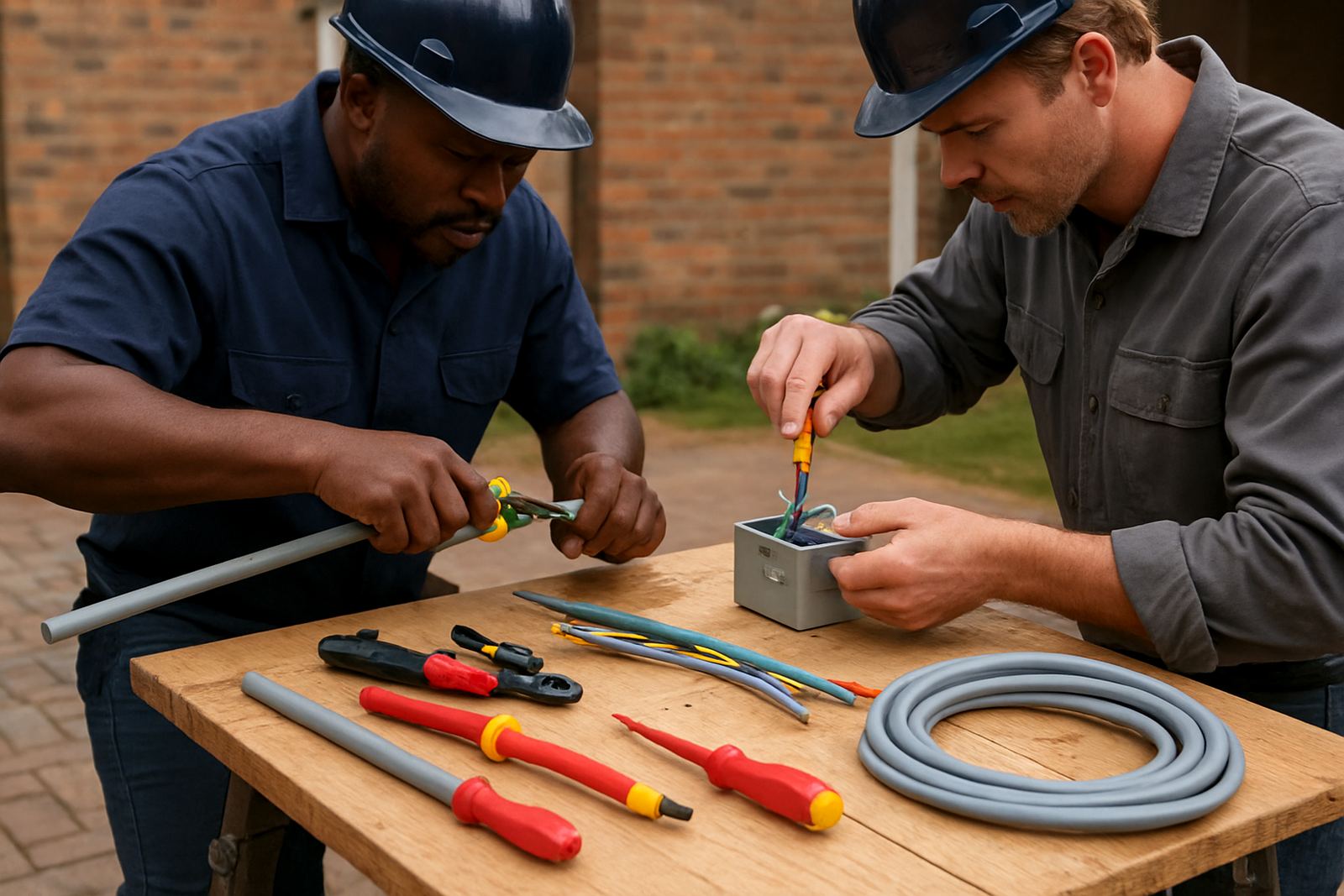
Most crews need a practical mix of insulated hand tools, cable handling gear, testing accessories, marking items, fixings and a few spares that save a second trip. In Durban and the coastal belt, humidity can also punish poorly stored tools, so storage and basic corrosion care matter just as much as the tool list.
- Insulated screwdrivers and pliers for panel and distribution work
- Cable cutters, strippers and crimping tools for neat terminations
- Drill and driver accessories for brackets, glands and clips
- Markers, tapes, labels and lockout items for tidy identification
- Cases, pouches and organisers that keep small parts from going missing
Planning A Workshop Or Van Stock List
If your team is expanding, or you are replacing old mixed stock, start with the jobs that happen every week. That usually means panel repairs, DB alterations, conduit support, fitting changes and cable terminations. From there, build a standard list for each vehicle or bay so the same basics are always available.
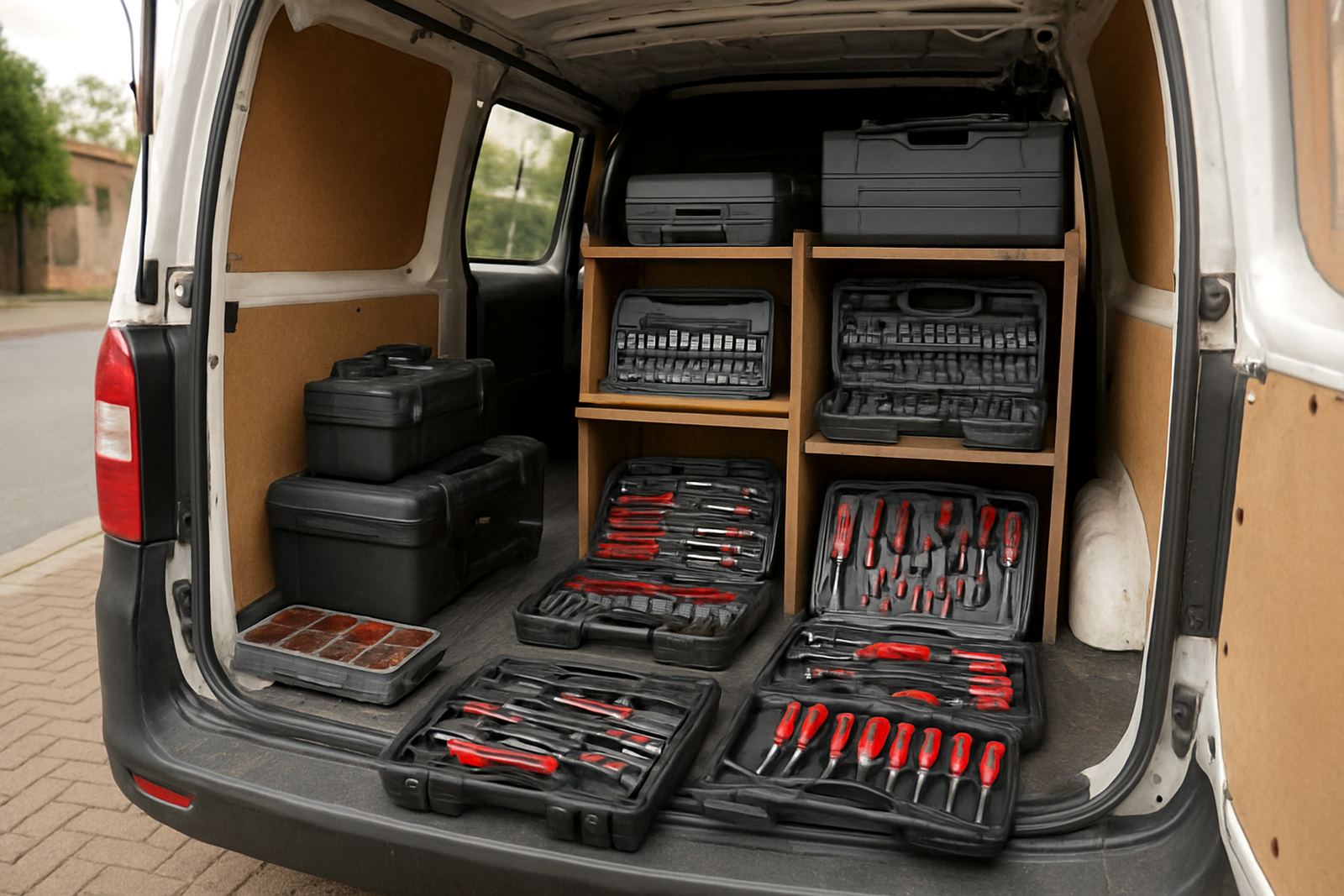
We often help contractors split stock into three parts: daily carry items, van stock and workshop reserve. Daily carry items stay with the technician. Van stock covers repeat consumables and common replacements. The workshop reserve holds slower-moving spares, bulk fittings and emergency replacements. That structure cuts time wasted on counting boxes at the end of the week, and it also helps with stock control when more than one team is on the road.
- Set one standard kit per vehicle to reduce mismatch between teams
- Keep fast-moving consumables in clearly marked containers
- Store replacement bits, blades and discs by size and use
- Use simple naming for shelves and tubs so everyone can find items quickly
Starter Kits For New Installers And Teams
New installers do not need every item on day one, but they do need a sensible base kit that lets them work cleanly and safely. A starter kit should cover the tools used most often, plus a few extras for site conditions in KwaZulu-Natal where dust, heat and rain can all show up in the same week. For apprentices, a kit with the right basics is usually better value than buying low-grade singles later.
Starter kits for electrical work normally include hand tools, measuring tools, a basic selection of bits and accessories, storage and a few consumables. If the team is doing maintenance work in offices, shops or body corporates, it also helps to include items for neat close-off and sign-off, such as labels, cable ties and test-ready markers. We can bundle items to suit your budget, whether you are setting up one technician or a whole crew.
- Entry-level starter kits: from about R1,500 to R3,500
- Mid-range field kits: from about R3,500 to R8,000
- Expanded workshop kits: from about R8,000 to R20,000 plus
Common Mistakes That Slow Electrical Jobs Down
A lot of wasted time comes from small gaps in the kit, not from major tool failure. A crew may have power tools but no matching accessories, or good cutters but the wrong terminals and fixings for the job. Another common problem is buying only for one type of site and then finding the stock does not suit maintenance work at all. That leads to extra runs, delayed handovers and unhappy clients.
We also see teams underbuy on storage and labelling. Loose bits get mixed, cable accessories go missing and the van turns into a search exercise. In humid conditions near Durban, poor storage can also mean rust and seized fasteners. A proper set of pouches, boxes and moisture-aware storage saves money over time, even if it feels like a small line item at the start.
- Buying the cheapest bit sets and replacing them too often
- Using one mixed box for all sizes, which wastes time on site
- Forgetting spare cutters, blades and consumables for busy weeks
- Leaving exposed metal tools in damp boxes or open vans
- Not matching accessories to the drill or driver already in use
Budgeting For Panels, Cabling And Fittings
Budget depends on whether you are equipping a single installer, a maintenance pair or a full workshop. A useful approach is to divide spend between must-have tools, consumables and back-up stock. That way you avoid tying up too much cash in items that will sit on a shelf while basic working stock runs short. For many electrical contractors, the first target is a complete core kit for each technician, then a controlled reserve for higher-use parts.
For planning purposes, a lean two-person setup may start around R6,000 to R12,000 for the basics, depending on what is already on hand. A more complete team issue with better storage, more accessories and workshop reserve can sit between R15,000 and R40,000. Larger maintenance operations, or teams taking on ongoing municipal and commercial work, may budget higher once testing accessories, replenishment stock and replacement matching are included.
If you are working in Pinetown, New Germany or Westmead, it is often worth standardising around the same kit across vehicles, so re-ordering stays simple and no one wastes time comparing slightly different items.
How Jameson Tools Supports Electrical Contractors
Jameson Tools works with installers and maintenance teams from our base in Pinetown, Durban, with nationwide courier delivery. We help with tool kit planning, starter kit bundling, consumables replenishment and tool replacement matching, so your team can keep working without long delays. If you are setting up a new bay or refreshing an older workshop, we can also help standardise your stock list so ordering becomes easier month to month.
Our team supports customers across Pinetown, New Germany, Westmead, Hillcrest, Durban North and Umhlanga, and we assist contractors who need courier delivery to other provinces as well. For teams that want hands-on guidance, we can arrange on-site tool inductions and practical workshop support, including advice on what to carry in the van and what to keep at the base. Sibusiso Mthembu leads the business, with support from a team that understands trade work and the pressure of getting jobs finished on time.
For quotations, stock checks or a planned kit list, email orders@jameson.co.za. If you need one kit for a new apprentice or a full refresh for the workshop, we will help you match the tools to the job and the budget.