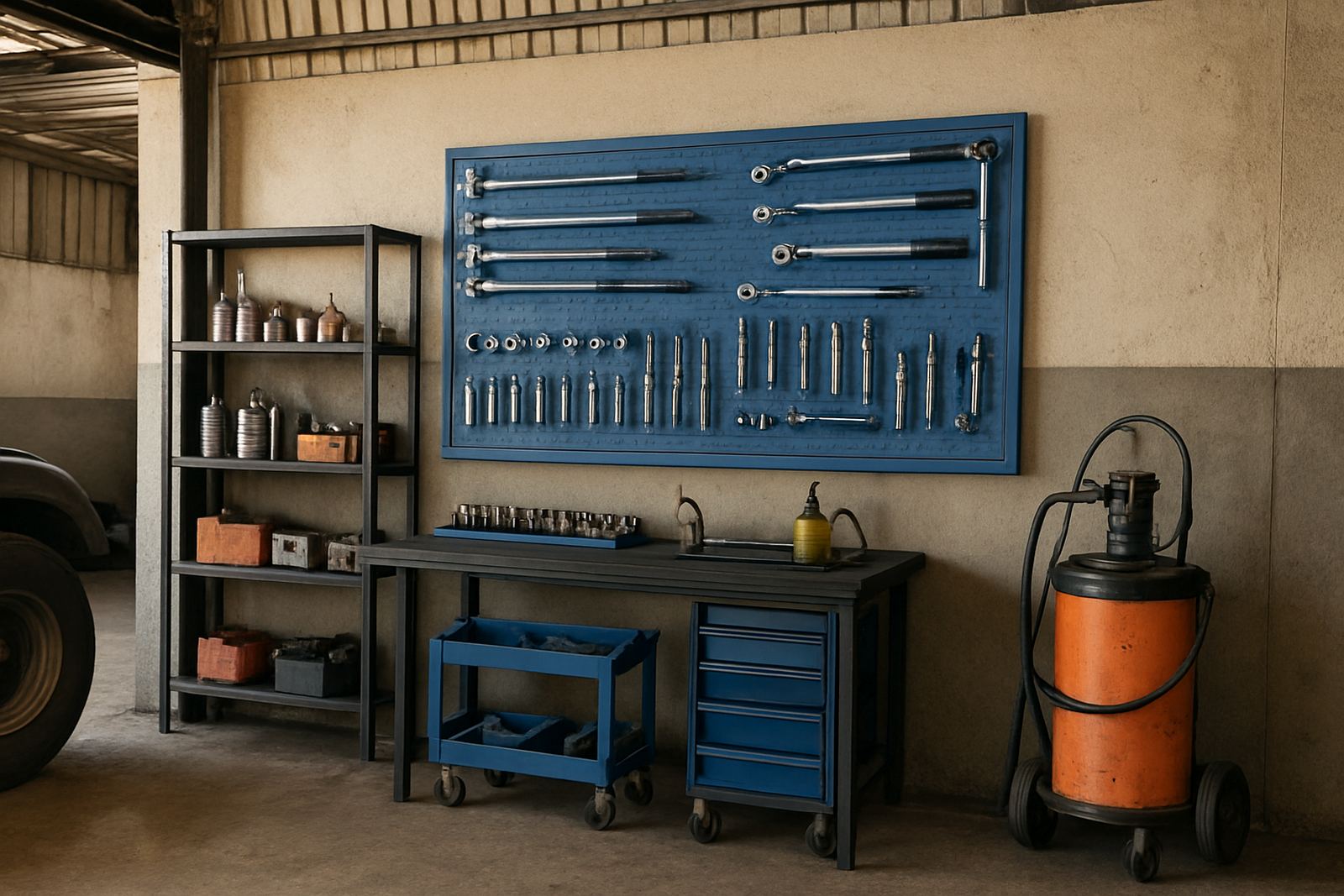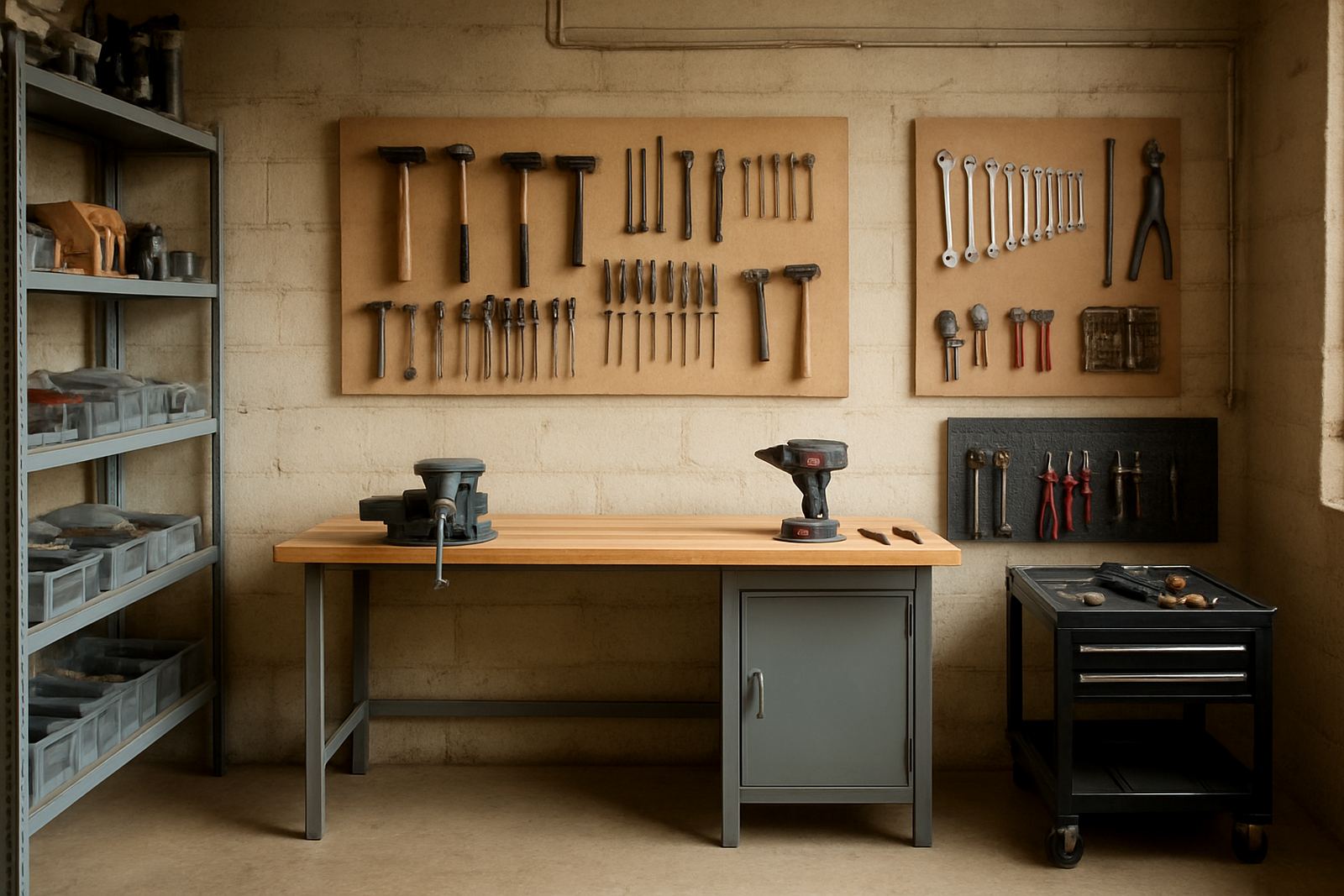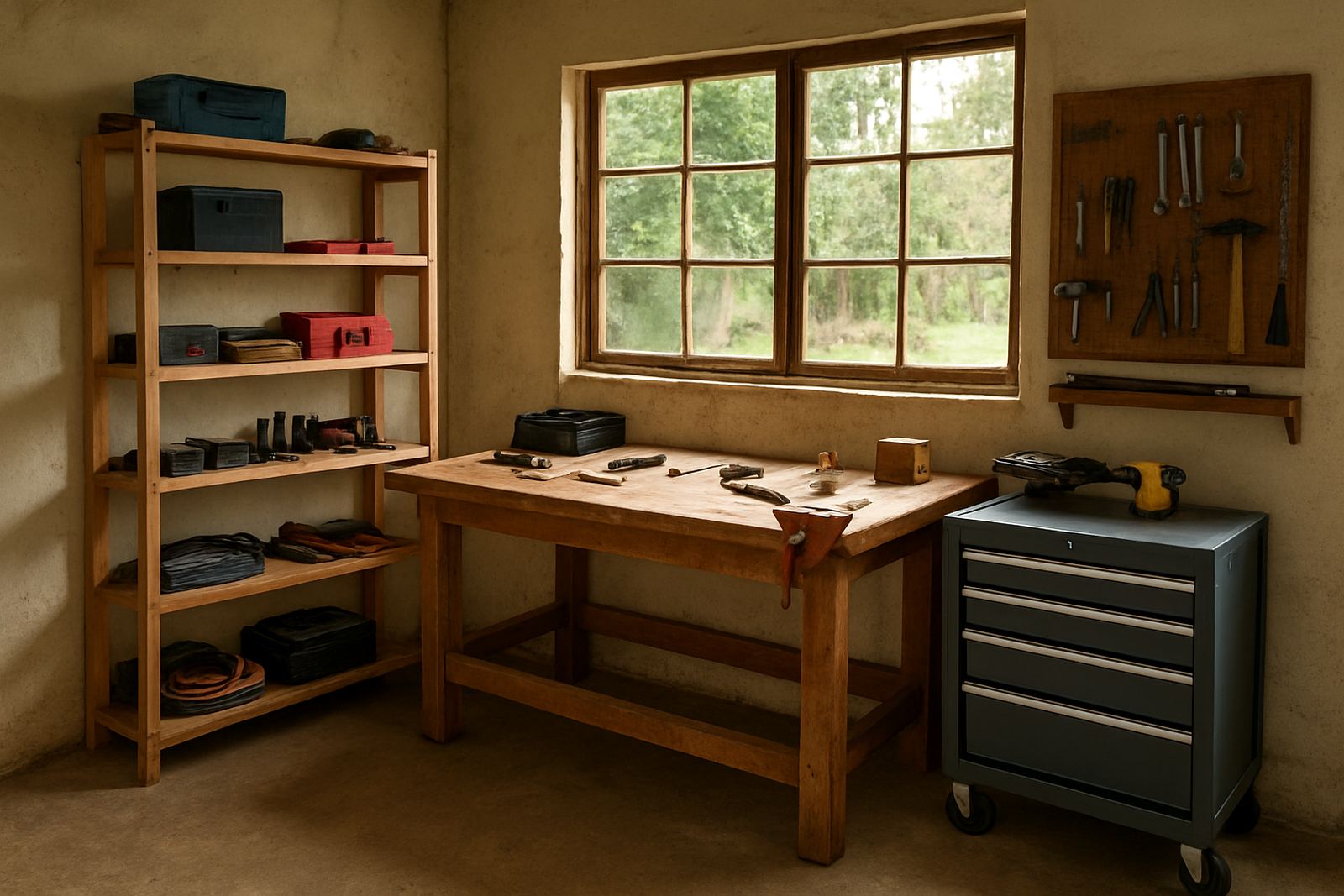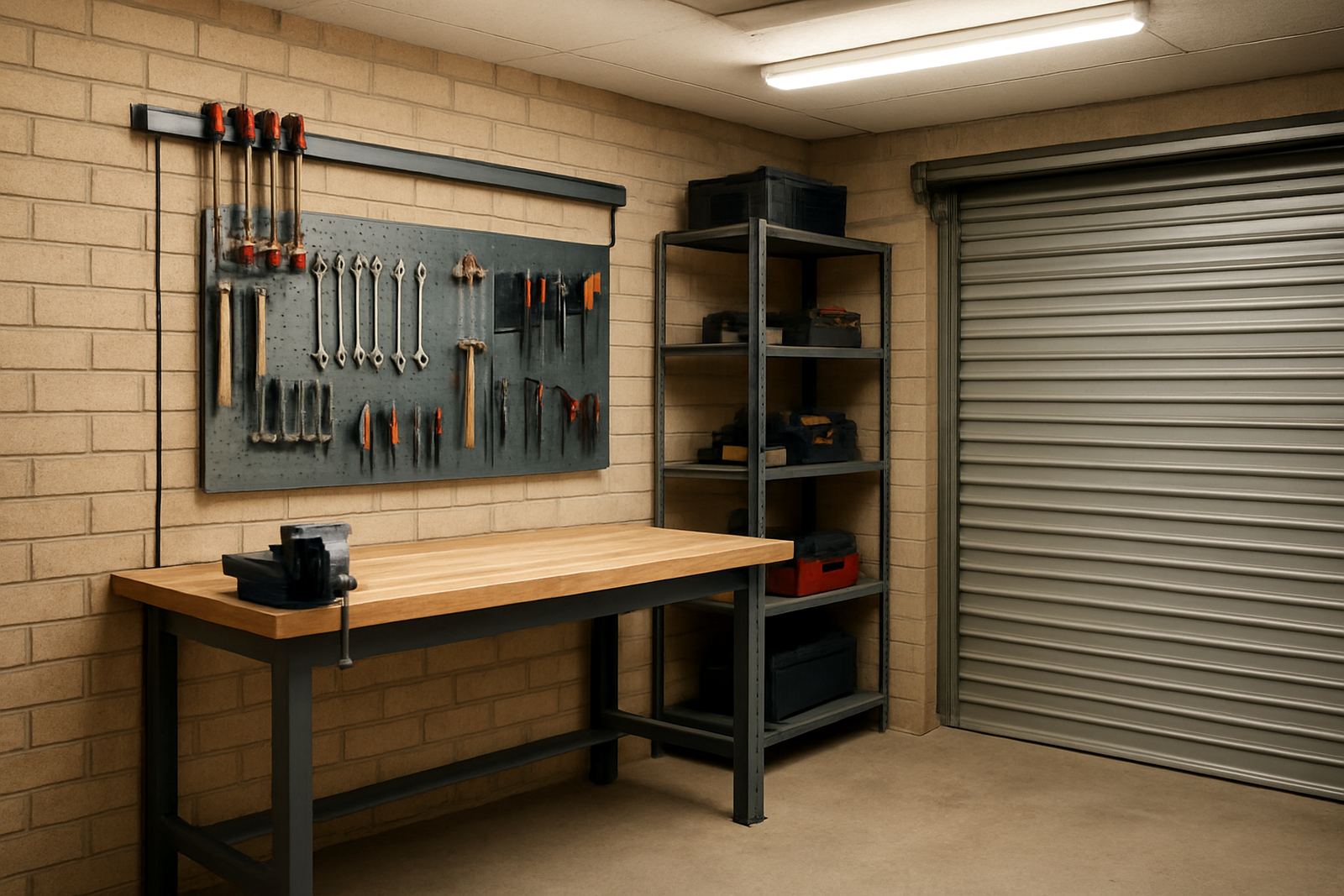
Client brief for a busy Umhlanga garage
The client was a homeowner in Umhlanga who works on family vehicles, flat-pack repairs and small home improvement jobs after hours. The garage had good floor space but no real order, so the brief was to turn it into a premium home workshop with clear storage, accurate hand tools and enough flexibility for daily use.
They wanted one place for fasteners, cutting tools, measuring gear, hand tools and a few power-tool accessories, with a setup that would not feel cluttered. It also had to be practical for two people using it on the same day, so the layout needed clear zones and easy access to the most used items.
What made the space tricky
Like many coastal garages in the Umhlanga area, the room had humidity, fine dust from the driveway and limited wall space once the vehicle was parked. There was also no fixed benching, which made it harder to keep tools together and slowed down simple jobs like hinge adjustments or shelf assembly.
Load-shedding was another factor. The client needed a setup that would still work well in low light and during short outages, so we kept the most important hand tools close to the main working zone and planned for battery powered accessories rather than relying on mains power for every task.
- Space constraint: one vehicle bay plus a narrow side working zone
- Coastal exposure: salt air and humidity near the Umhlanga side of Durban
- Storage need: separate keeping areas for precision tools and general use items
- Power concern: useful even when lights or chargers are off for a while
Tool kit planning and starter bundle supply
We started with a tool kit planning session to list the jobs the owner actually does in a month, not just the tools that sound impressive. From that we built a starter bundle around measured storage, dependable hand tools and the right consumables for routine home maintenance.
The supplied items covered general fixing, marking, cutting, tightening and basic surface prep. We also matched replacement pieces for a few existing tools the client already had, so the new kit sat alongside what was worth keeping instead of forcing a full change-out. The final pack was practical and tidy, and not overdone.
- Modular hand tool set for general repairs and furniture assembly
- Precision measuring items for brackets, shelves and alignment work
- Power-tool accessory pack for drilling, driving and sanding tasks
- Consumables drawer with tips, blades, tape and fixings
- Labelled storage for split use between home jobs and vehicle tasks
Workshop setup details and storage layout
The workshop layout was arranged in layers. The first layer was daily access, with the items used every week kept at eye level and within arm’s reach. The second layer held slower-moving stock and backup pieces. The third layer was for seasonal or occasional items such as extra fixings, sealants and spare abrasives.
We standardised the stock list so the client would know what to reorder before something runs out. That matters in a home garage because if screws, drill bits or blades get mixed up, the space starts drifting back into clutter. The storage plan used shallow containers, marked shelves and grouped items by task rather than by random size.
- Clear shelf map for fasteners, fixings and consumables
- Shallow trays for small parts to stop mix ups
- Dedicated zone for cutting, measuring and marking tools
- Easy reach place for everyday driver bits and drill accessories
Training and handover on site
Zanele handled the training side with a short on-site induction so the client could use the space properly from day one. That included how to keep the tools grouped, how to check wear on consumables and how to put things back so the garage stays functional. A neat setup only works if the owner can keep it that way, and this one needed a simple routine.
We also walked through safe storage, especially for sharp items and fixings that should not be left loose on a work surface. The client was shown how to protect metal tools from moisture after use, which is useful in coastal Durban where a bit of care goes a long way.
- Basic induction for tool care and safe handling
- Quick system for sorting used and unused consumables
- Advice on wiping down metal tools after damp weather
- Short checklist for monthly stock review and top-ups
Timeline, results and what we would repeat
The full project ran over 2 weeks from initial discussion to final handover. Week one covered the brief, stock selection and layout planning. Week two covered supply, organisation, labelling and the final walk-through. It was a fairly tight turnaround, but the clear brief kept things moving and avoided wasted spend.
The result was a garage that feels like a proper home workshop rather than a catch-all storage room. The owner now has quicker access to the tools they use most, a better place for small parts and a stock list that supports easy reordering. We would use the same approach again for other Umhlanga homes, especially where space is limited and the client wants a tidy, grown-up workshop that still handles daily jobs. A good system saves time, it also saves frustration.
- 2 week turnaround from planning to handover
- Improved access to everyday tools and accessories
- Cleaner storage for humid coastal conditions
- Simple reordering list for ongoing support
Key facts
| Project type | Home garage workshop setup |
|---|---|
| Location | Umhlanga, Durban |
| Timeline | 2 weeks |
| Core focus | Storage, precision tools and daily DIY convenience |
| Delivery | Nationwide courier with local support in Durban and Pinetown |
| Support included | Tool kit planning, starter kit bundling and on-site tool induction |